The Unseen Curve: Tracking Hidden Growth Faltering in Post-COVID Preschool Children
Mei Huang¹, Li Wei², Xia Liu³, Yun Zhao⁴
Keywords:
Pediatric Growth, COVID-19 Sequelae, IGF-1, Preschool Children, Linear Growth DelaAbstract
Background:
Although most children recover well from COVID-19, the pandemic’s indirect effects on child nutrition, physical activity, and growth remain under-investigated—especially in preschoolers during critical development windows.
Methods:
A prospective cohort study was conducted between August 2022 and February 2024, involving 642 preschool children (ages 3–5 years) from five urban and rural regions in China. Children with PCR-confirmed COVID-19 were followed for 12 months and compared to age- and sex-matched controls without prior infection. Anthropometric data (height, weight, BMI), nutritional intake (3-day dietary logs), and serum growth-related biomarkers (IGF-1, vitamin D) were collected at baseline, 6 months, and 12 months.
Results:
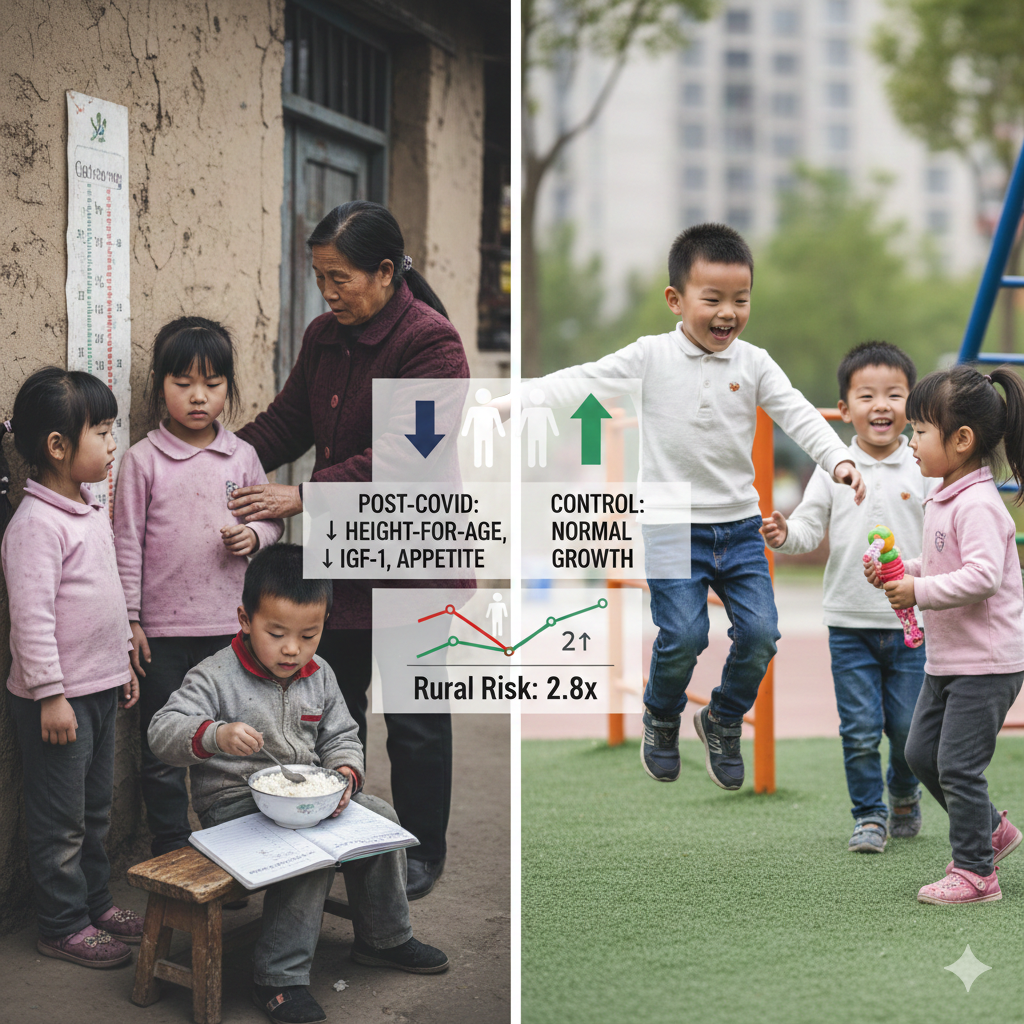
At 12 months, 26.5% of post-COVID children showed a ≥10 percentile drop in height-for-age Z-score compared to 8.2% in the control group (p < 0.001). Mean IGF-1 levels were significantly lower in the post-COVID group (107.4 ± 22.1 ng/mL vs 123.8 ± 19.5 ng/mL, p < 0.001). Reduced appetite and decreased physical activity were reported by caregivers in 41.3% and 57.8% of post-COVID children respectively. Rural children had higher risk of growth faltering (RR: 2.8; 95% CI: 1.9–4.3). No significant difference in weight-for-height or BMI was observed, suggesting selective linear growth impact.
Conclusion:
Subclinical growth faltering may be a delayed consequence of COVID-19 in preschool children, particularly in vulnerable populations. Routine post-infection nutritional screening and community-based interventions could help mitigate long-term developmental impacts. Growth monitoring should be expanded to include COVID-19 recovery as a recognized risk factor in early childhood.
Downloads