Association Between Digital Eye Strain and Academic Performance Among Clinical-Year Medical Students at the University of Bahri, Khartoum State, Sudan, 2025.
Ziryab Mahmoud 1 , Rayan Ali 2 corresponding author Rayan Ali
Keywords:
: Digital eye strain, clinical-year medical students, visual hygiene, screen time, academic performanceAbstract
https://doi.org/10.5281/zenodo.17857798
Digital eye strain (DES) is a growing occupational and academic issue among clinical-year medical students, driven by prolonged screen exposure during both theoretical learning and clinical training. Symptoms such as eyestrain, ocular dryness, headaches, and musculoskeletal discomfort may impair concentration, reduce productivity, and negatively influence academic outcomes.
Methodology:
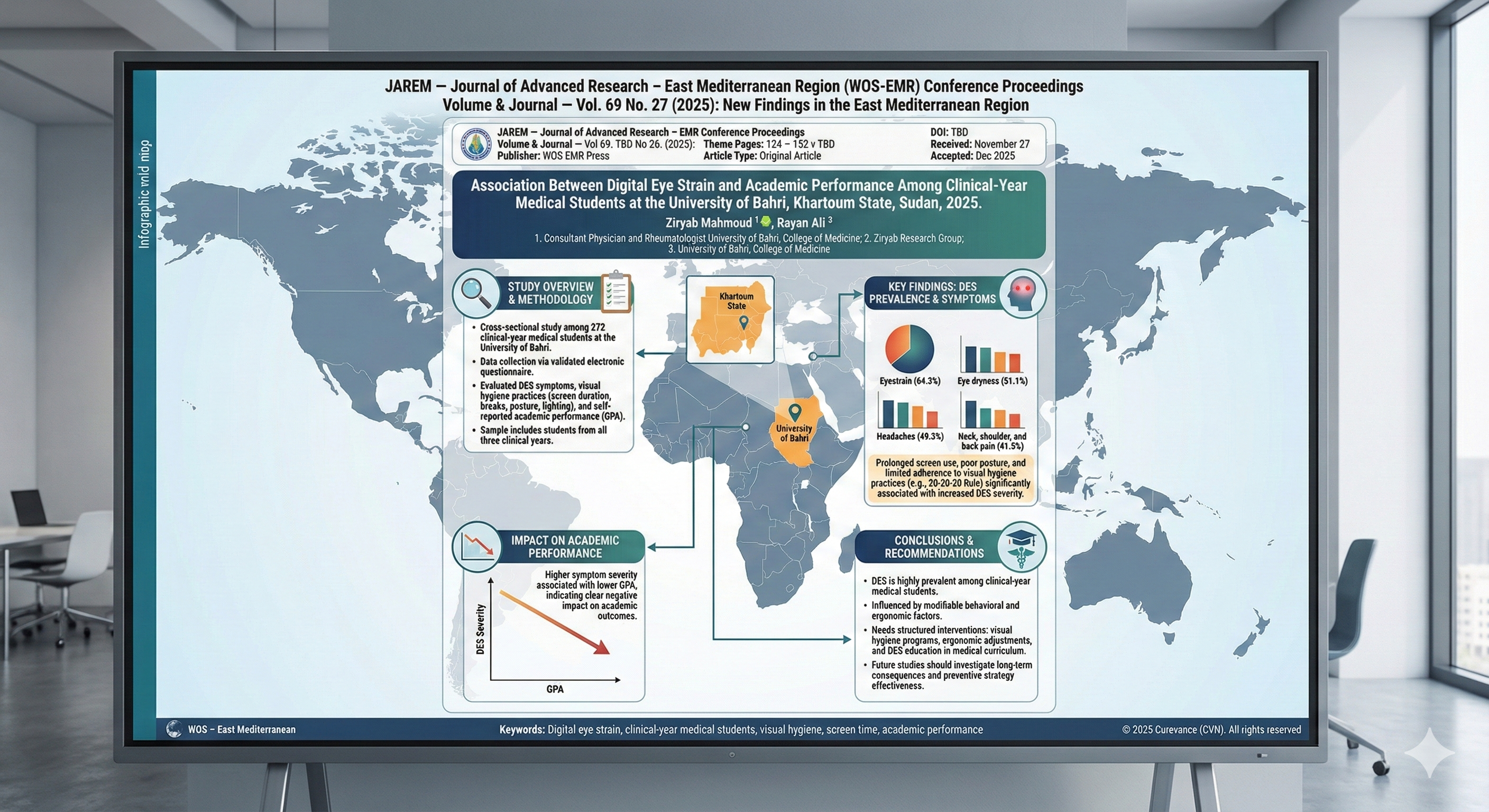
A cross-sectional study was conducted among 272 clinical-year medical students at the University of Bahri. Data were obtained using a validated electronic questionnaire assessing DES symptoms, visual-hygiene practices (screen duration, frequency of breaks, posture, and lighting conditions), and self-reported academic performance measured by GPA. Students from all three clinical years were included to ensure representativeness.
Results:
The most frequently reported symptoms were eyestrain (64.3%), eye dryness (51.1%), headaches (49.3%), and neck/shoulder/back pain (41.5%). Prolonged screen use, suboptimal posture, and limited adherence to visual-hygiene behaviors such as the 20-20-20 rule were significantly associated with higher DES severity. Increased symptom severity was correlated with lower GPA, demonstrating a measurable impact on academic performance. These findings align with the study objectives by identifying the prevalence of symptoms, contributing factors, and their academic implications.
Conclusion:
DES is highly prevalent among clinical-year medical students and is strongly influenced by modifiable behavioral and ergonomic factors. The observed association between symptom burden and academic performance highlights the importance of structured preventive measures. Implementing visual-hygiene education, ergonomic training, and integrating DES awareness into the medical curriculum may help reduce symptom severity and improve learning outcomes. Future research should explore long-term DES impacts and evaluate the effectiveness of targeted preventive interventions.
Downloads