Veins of Fire: Uncovering the Hidden Burden of Undiagnosed Venous Thromboembolism in Type 2 Diabetic Patients
Matteo Romano¹, Giulia Ferrara², Luca Moretti³
Keywords:
Type 2 Diabetes, Venous Thromboembolism, Undiagnosed DVT, Doppler Ultrasound, HypercoagulabilityAbstract
Background:
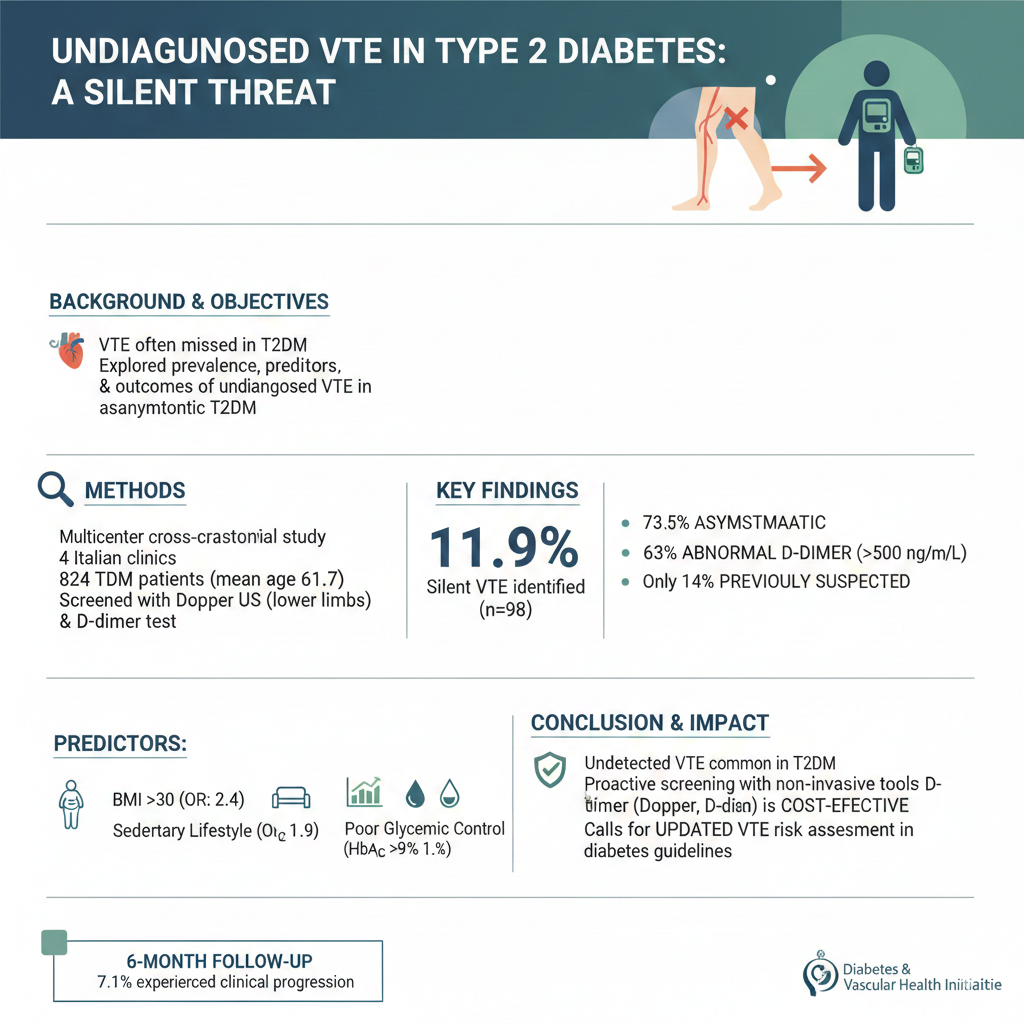
Venous thromboembolism (VTE) is a major yet underdiagnosed complication in patients with type 2 diabetes mellitus (T2DM), often overshadowed by more commonly monitored cardiovascular events. This study explores the hidden prevalence, risk predictors, and clinical outcomes of undiagnosed VTE in asymptomatic T2DM patients.
Methods:
A multicenter cross-sectional screening study was conducted across four Italian endocrinology clinics between April 2022 and April 2024. A total of 824 T2DM patients (mean age 61.7 ± 10.3 years; 52.1% male; average HbA1c 8.2%) without prior VTE diagnosis or current anticoagulation therapy were included. All participants underwent Doppler ultrasound of the lower limbs and D-dimer testing.
Results:
Silent VTE (mostly distal deep vein thrombosis) was identified in 11.9% of participants (n=98), with 73.5% being completely asymptomatic. Among them, 63% had abnormal D-dimer levels (>500 ng/mL). Significant predictors included BMI >30 kg/m² (OR: 2.4; p < 0.001), sedentary lifestyle (OR: 1.9; p = 0.004), and poor glycemic control (HbA1c >9%) (OR: 1.8; p = 0.03). Only 14% of patients with positive findings were previously suspected to have thrombosis by their treating physicians. At 6-month follow-up, 7.1% of those with undiagnosed VTE experienced clinical progression requiring hospitalization.
Conclusion:
Undetected VTE in patients with T2DM is more common than expected, potentially compromising long-term vascular outcomes. Proactive screening using non-invasive tools may offer a cost-effective strategy to mitigate future complications. These findings call for updated VTE risk assessment protocols in diabetes management guidelines.
Downloads